Why 'Indian Point' Still Matters in the Nuclear Debate
Ivy Meeropol's 2015 documentary on the Indian Point plant near NYC remains a sharp study of how nuclear risk is governed and argued about.
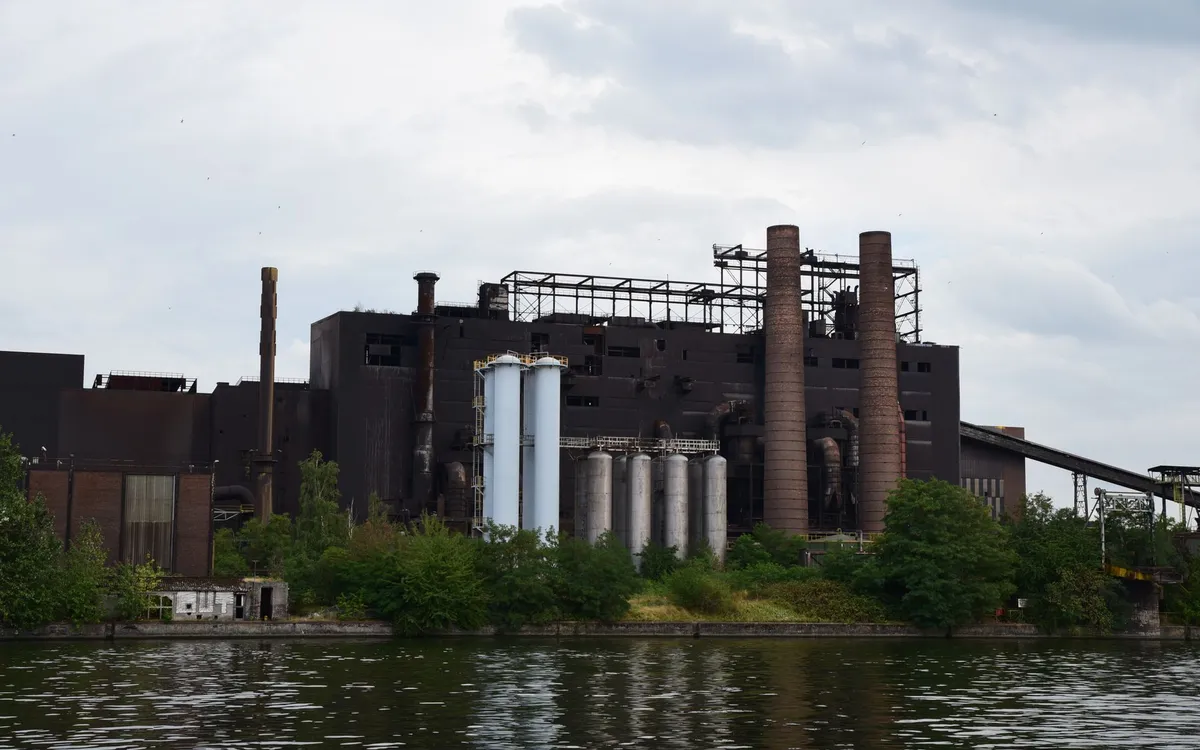
Ivy Meeropol’s Indian Point (2015) opens not with sirens or stock footage of mushroom clouds but with the slow, almost domestic rhythm of a working power plant. Thirty-some miles north of Manhattan, on the east bank of the Hudson, two reactors hum away while commuters drive past and fishermen cast lines in the river. That ordinariness is the film’s first argument: the most consequential infrastructure in your life is often the stuff you stop noticing.
Distributed by First Run Features, Indian Point arrived in a strange moment for the American nuclear conversation. Fukushima was four years in the rear-view mirror, close enough to still sting. The plant itself was up for relicensing, its operator pushing to keep two reactors running well past their original design life. Meeropol, who had already shown a feel for institutional pressure in Heir to an Execution, treats the relicensing fight as a way into a much larger question: how does a society actually decide that something dangerous is acceptable?
A documentary that refuses an easy villain
What makes the film durable is its refusal to flatten the people inside it. Meeropol spends real time with Entergy employees, including control-room operators who clearly love their work and believe in its safety. She also follows Paul Blanch, a former industry engineer turned critic whose credibility comes precisely from decades inside the business. And she gives unusual screen time to Gregory Jaczko, the former chairman of the Nuclear Regulatory Commission, whose tenure ended in a very public clash with his own agency.
That last thread is the quiet heart of the movie. Jaczko’s frustration is not the cartoon fury of an anti-nuclear protester; it’s the disillusionment of a regulator who came to believe the regulator had become too cozy with the regulated. The film lets you sit with that discomfort instead of resolving it. If you want a primer on how this kind of access and restraint defines the form, the case study sits well alongside our look at what makes a great observational documentary.
The film’s real subject isn’t the reactor. It’s the machinery of trust around it — the hearings, the inspections, the press releases, the assumption that someone competent is watching.
The Hudson as a character
Visually, Indian Point leans on its setting. The Hudson is wide and beautiful and unnervingly close to the cooling intakes. Meeropol returns again and again to the river, to the towns of Buchanan and Peekskill, to the schools and homes that fall inside the emergency planning zones. The geography does argumentative work: you cannot watch the film without doing the mental math about evacuation routes and twenty million people in the metro region.
She resists the temptation to score every shot for dread. There’s no manipulative voice-of-God narration insisting you panic. The camera mostly observes and lets the stakes accumulate. That choice places the film in a lineage worth understanding, which is why it helps to know the difference between direct cinema and cinéma vérité before you watch.
Why it still reads well in the 2020s
It would have been easy for Indian Point to age into a period piece. It hasn’t, for a few reasons.
| What the film raises | Why it stayed relevant |
|---|---|
| Aging reactors past their design life | The fleet kept aging; license extensions kept coming |
| Regulatory capture | A perennial worry in any high-stakes industry |
| Climate-era reappraisal of nuclear | The “is nuclear actually green?” debate only intensified |
| Evacuation near dense cities | A question every metro region quietly carries |
The climate angle is the sharpest one in hindsight. When the film came out, nuclear power sat in an awkward political spot: distrusted by much of the environmental left, championed by a growing faction who saw it as a low-carbon necessity. Indian Point doesn’t resolve that tension, and it’s better for it. It shows you a real plant, real people, and a real decision, then asks you to hold the contradictions.
Indian Point itself stopped generating in 2021, when its last reactor was shut down. That ending gives the film an unexpected coda: we now know how this particular story closed, which makes Meeropol’s earlier ambivalence look less like fence-sitting and more like honest reporting on an open question.
What to watch for as a filmmaker
If you’re studying the craft rather than the politics, Indian Point is a clinic in access and balance. Meeropol got inside a facility that had every incentive to control its image, and she neither softened nor sensationalized what she found. That balancing act is largely an ethical one, and it connects directly to the harder questions we unpack in our piece on the ethics of documentary filmmaking.
A few things to notice on a rewatch:
- Who gets the last word in a scene. Meeropol often cuts away from an industry talking point to a quiet shot of the river, letting the image complicate the claim.
- How she handles Jaczko. He’s clearly sympathetic, but she doesn’t turn him into a hero; his certainty is questioned too.
- The absence of a tidy thesis. The film trusts you to weigh evidence rather than handing you a verdict.
Indian Point matters because it models a kind of argument we’ve mostly lost the patience for: slow, sourced, willing to live with uncertainty. You can disagree with where any given viewer lands and still recognize that the film did its job. For more on the form it belongs to, the whole documentaries hub is worth a browse, and the film itself remains the best starting point.
Some links on Indian Point Film are affiliate links: if you buy or subscribe through them we may earn a commission, at no extra cost to you. It never changes our recommendations.
Keep reading

Direct Cinema vs Cinéma Vérité: What's the Difference?
The fly on the wall versus the provocateur with a camera — the two great observational traditions are closer in look than in belief.

The Six Documentary Modes of Bill Nichols, Explained
Poetic, expository, observational, participatory, reflexive, performative — a working map of how documentaries actually behave.
Werner Herzog's Documentaries, Ranked
He'd tell you facts are the truth of accountants. Here's a ranking of the films where Herzog goes hunting for something stranger.