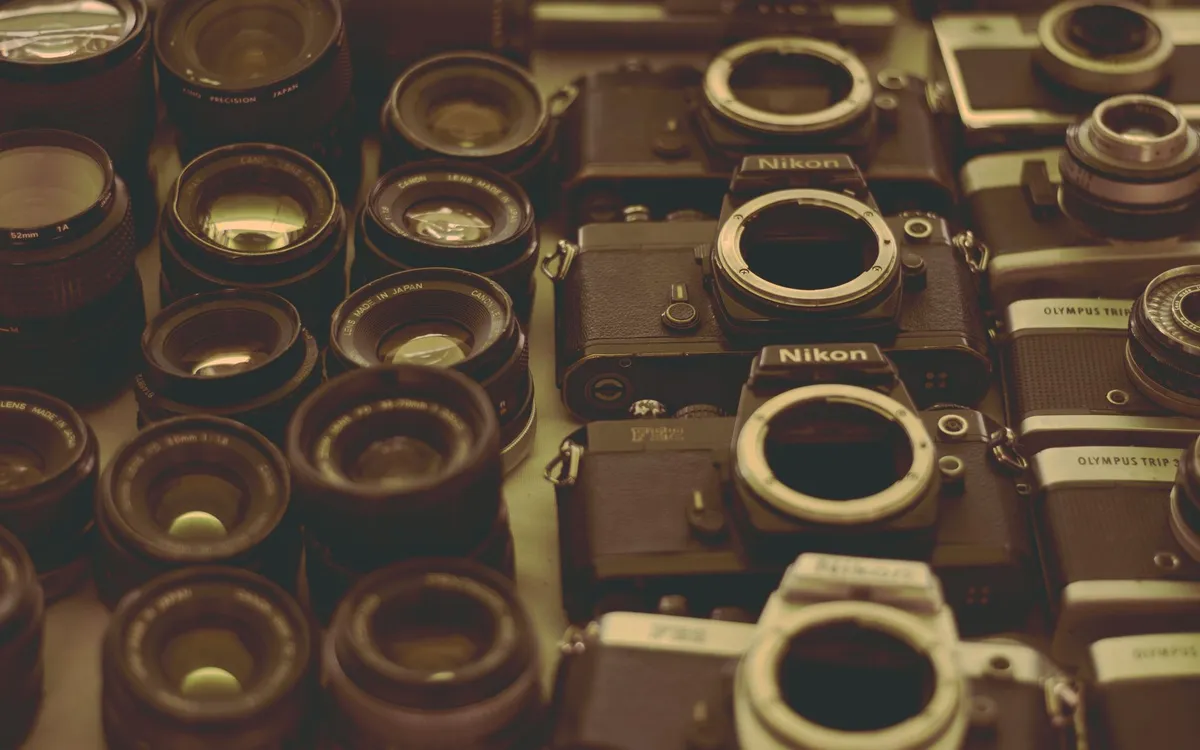
Shooters obsess over camera bodies and treat lenses as an afterthought, which is exactly backwards. The body captures the light; the lens decides what that light looks like — the depth, the rendering of a face, how a background falls out of focus. A modest camera with a great lens beats a great camera with a kit zoom, every time. And lenses outlast bodies by years, so this is where your money compounds.
For documentary specifically, a few things matter. You want a fast aperture (f/1.8 to f/2.8) for those dim rooms you can’t relight and to throw backgrounds soft on an interview. You want flexibility, because you often can’t choreograph the action or swap glass mid-moment. And you want something light enough to handhold for an hour. Here’s what fits that bill.
Sigma 18-35mm f/1.8 — the do-everything zoom
If I could own one lens for documentary, it might be this. The Sigma 18-35mm f/1.8 is famous for a reason: a zoom that holds f/1.8 across its whole range, which used to be the stuff of fantasy. It’s sharp wide open, the range covers interviews and most B-roll, and that constant fast aperture means you rarely need to change lenses or add light. Originally an APS-C lens, it pairs beautifully with cropped sensors and Micro Four Thirds via adapter. Around $450 used, it’s the best value in this whole list. It’s also the lens I’d pair with a sub-$2,000 kit.
A fast 50mm prime — the interview portrait lens
Every documentary bag should have a fast normal prime. A 50mm f/1.8 (the “nifty fifty,” often around $125–$200 new depending on mount) gives you that classic, slightly compressed portrait look for interviews — flattering, with a soft background that draws the eye to the subject’s face. On a full-frame body it’s a true normal; on crop it reads a bit tighter, which is also lovely for a talking head. Cheap, sharp, light. There’s no excuse not to own one.
Tamron 28-75mm f/2.8 — the full-frame workhorse zoom
For full-frame mirrorless shooters (Sony E-mount especially), the Tamron 28-75mm f/2.8 (around $800) is the standard-zoom sweet spot. It covers wide-ish to short-telephoto, holds f/2.8 throughout, focuses fast and quietly, and weighs little. It’s the lens that lives on the camera — wide enough for context, long enough for a clean interview at 75mm. Pair it with a low-light body like the A7S III and you’ve got a complete run-and-gun setup.
A wide prime — 24mm or 35mm — for context and intimacy
A fast wide prime (a 24mm or 35mm f/1.4–f/2.8) does two jobs documentary loves: it captures a whole space for establishing context, and it lets you get physically close to a subject for intimacy without distortion looking grotesque. The 35mm in particular is a classic verité focal length — close enough to feel present, wide enough to keep the world in frame. The camera makers’ own and Sigma’s Art primes both serve here.
Quick comparison
| Lens | Aperture | Best for | Rough price |
|---|---|---|---|
| Sigma 18-35mm f/1.8 | f/1.8 | All-round, low light | ~$450 used |
| 50mm prime | f/1.8 | Interview portraits | ~$125–$200 |
| Tamron 28-75mm f/2.8 | f/2.8 | Full-frame workhorse | ~$800 |
| 35mm prime | f/1.4–2.8 | Context, verité | varies |
How to choose
Start with a zoom if you can only buy one lens. Documentary rarely lets you stop the action to swap glass, and a fast standard zoom (the Sigma or the Tamron, depending on your sensor) covers most of what you’ll shoot. The flexibility is worth more than the marginal image-quality edge of a prime in the field.
Add a fast prime second, for interviews. The 50mm gives you that intentional, shallow-focus portrait look that signals “this is a real film.” It’s cheap enough that there’s no reason to wait.
Watch out for focus breathing and noisy autofocus motors if you shoot interviews — a lens that hunts audibly during a quiet, emotional moment can ruin a take by putting motor whir onto your audio track. And mind the weight: a heavy lens that’s brilliant on a tripod becomes a wrist-killer handheld over a long shoot. The best documentary lens isn’t the sharpest one on a test chart. It’s the one you’ll actually carry, that focuses reliably in the dark, and that renders a human face in a way that makes people want to keep watching. Buy for that, and you’ll be set for years — long after you’ve replaced the camera twice.
The Best Lenses for Documentary and Interview Work
We test and recommend documentary gear independently. Buying through our partner links helps fund the magazine, at no extra cost to you.
Browse gear at B&HSome links on Indian Point Film are affiliate links: if you buy or subscribe through them we may earn a commission, at no extra cost to you. It never changes our recommendations.
Keep reading
The Best Cameras for Documentary Filmmaking
Forget the spec-sheet wars. Here's what a documentary camera actually needs to do, and the bodies that do it.
The Best Lavalier Microphones for Interviews on a Budget
Bad sound kills a documentary faster than bad pictures. Here are the lav mics that'll save your interviews without draining the budget.
The Best Audio Recorders for Documentary Sound
Your camera records sound. It records it badly. Here's why a dedicated field recorder belongs in your bag, and which one to buy.